How Many?
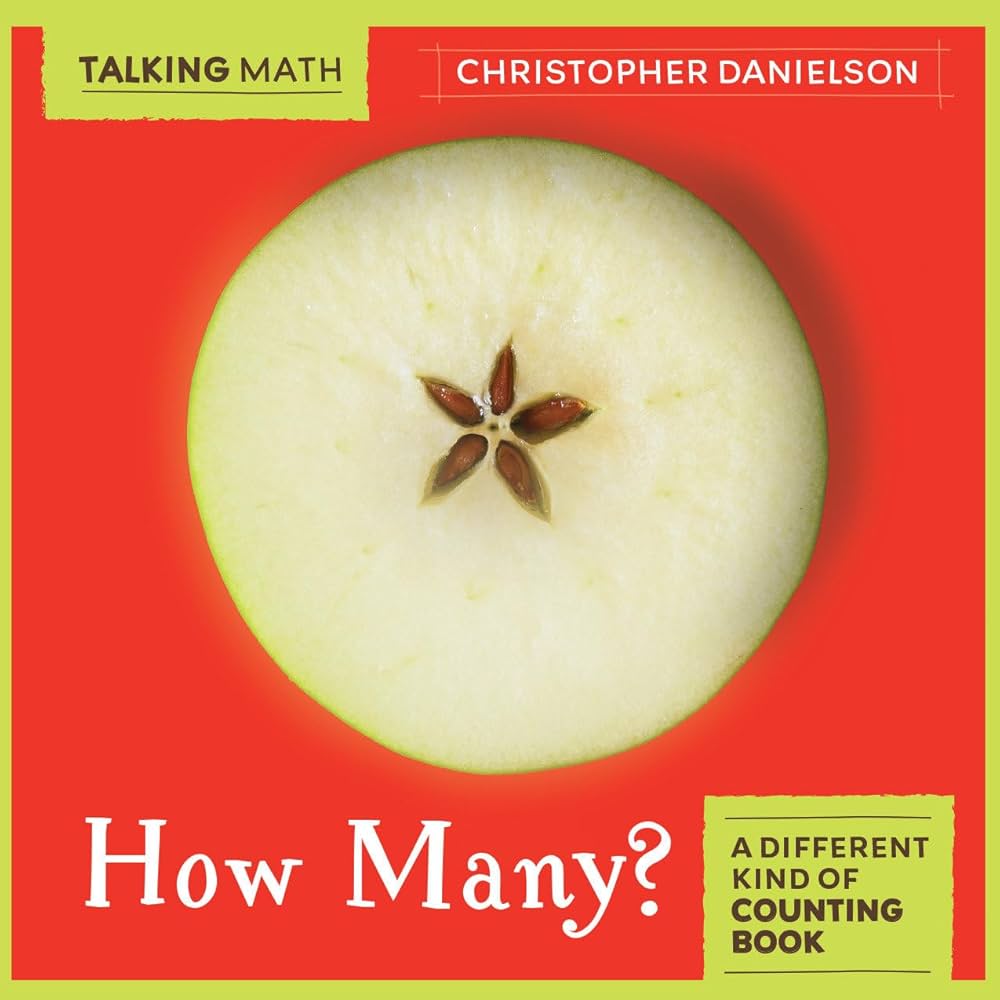
It started with a book left on the table.
Nothing fancy—just a small, skinny book titled How Many? by Christopher Danielson. But within minutes, that book had transformed the room into a buzz of questions, ideas, and math talk.
That’s the magic of How Many? It’s not your typical counting book. There are no directions, no “Count the apples” or “Circle the number three.” Each page shows a vivid photo—shoes, avocados, a bowl of fruit—and asks just one simple question: How Many?
At first, it seems obvious. You flip the page, you see the picture, and you start counting. But then the questions start.
“Do I count the box or the shoes in the box?”
“Do I count the shoelaces?”
“Can I count the holes? There’s a lot of holes!”

Saaliha, our resident first‑grade math wiz, proudly declares, “Five holes on one side, five on the other. That’s ten! And there’s two shoes, so… ten and ten is twenty!”
And that’s the beauty of How Many? There’s no single right answer. Children decide what to count, how to count it, and why. It invites them to think flexibly, justify their reasoning, and realize that math isn’t just about getting it “right”—it’s about making sense of the world.
Children love making sense of their world. They’re natural observers. They notice everything, ask endless questions, and love to challenge what you say. When we invite that curiosity into math, something beautiful happens: numbers shift from something to memorize to something that makes sense.
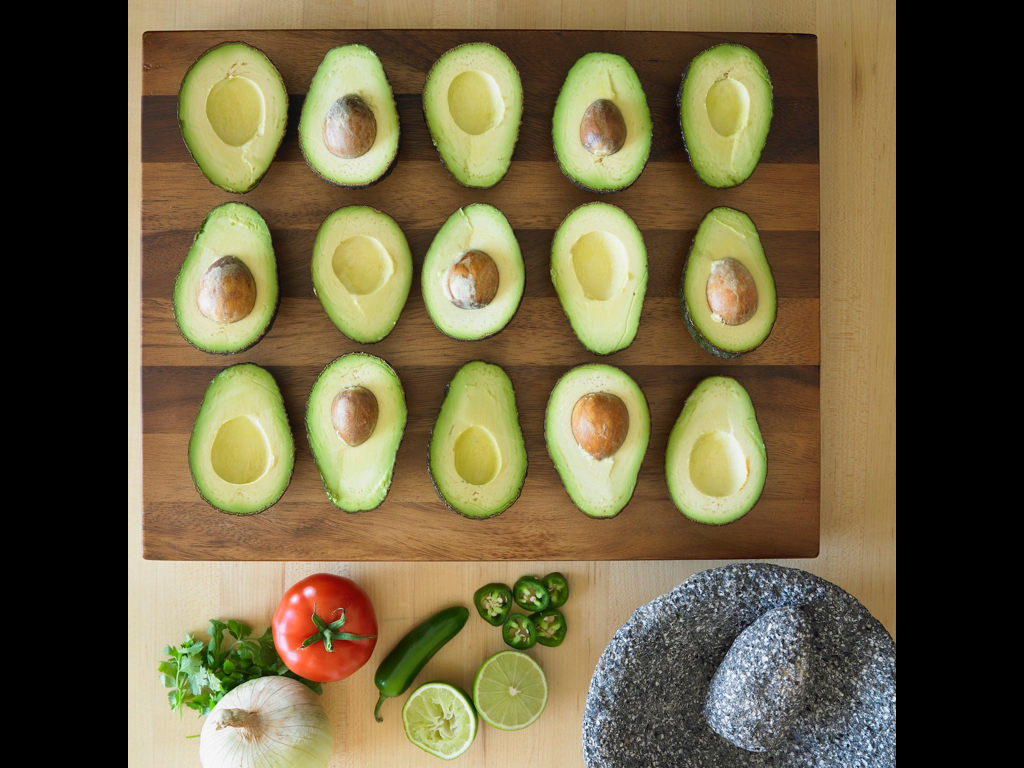
“This book is tricky…” said six‑year‑old Amari. “You think the answer is easy, but there are lots of ways to count. It’s hard but… fun.”
That’s the sweet spot—when math is playful, open‑ended, and connected to real life.
In those moments, children feel confident sharing ideas. They learn that different perspectives are valuable and begin to see themselves as capable thinkers and problem‑solvers.
What makes How Many? powerful isn’t just the counting—it’s the conversation.
When children explain how they counted, they’re not just giving an answer—they’re showing how they see the world. Children become both learners and teachers. They listen, reflect, and connect new ideas to their own understanding. This is mathematical sense‑making at its best—children constructing meaning through discussion, reasoning, and shared ideas.
When one child explains how they saw it, another child might suddenly understand something they didn’t before. Maybe they realize they can group items differently. Maybe they notice patterns they missed. Maybe they understand that there isn’t only one “right” way to solve a problem.
When children explain how they counted, they’re not just giving an answer—they’re sharing their thinking. Moments like that show what happens when math becomes social. The competition to be right stops because they’re collaborating to make sense. They’re using language to reason, compare, and refine their thinking.
And as they talk, they naturally use math vocabulary—words like “rows,” “groups,” “pairs,” and “sets.” These become the building blocks for deeper concepts like place value, operations, fractions, and algebraic thinking. Children learn to explain their reasoning, listen to others, and learn from new and different ideas. They develop the confidence to explain not just what they know, but how they know it.
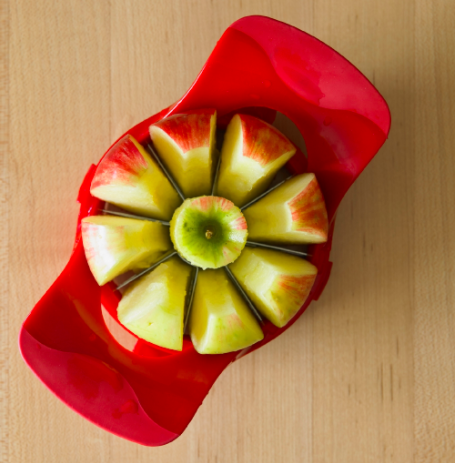
They ask questions. They look for patterns. They test their ideas. They learn from mistakes. Math is not about speed or memorization—it’s about curiosity, creativity, and connection.
Talking about math builds the foundation for all future math learning. It strengthens number sense, vocabulary, communication, and reasoning—the building blocks of algebra. Everyday moments become math moments. And when math feels like play, children feel safe to share ideas, take risks, and grow.
The beauty of How Many? is how easily it extends beyond the book. Suddenly, the world becomes a counting playground.
Grapes on a plate. Books on a shelf. Wheels on a truck. Suddenly, everything is fair game.
You can spark How Many? conversations anywhere with simple questions: “How many do you see?” “What are you counting?” “Could someone else count it differently?” “How did you know that?”
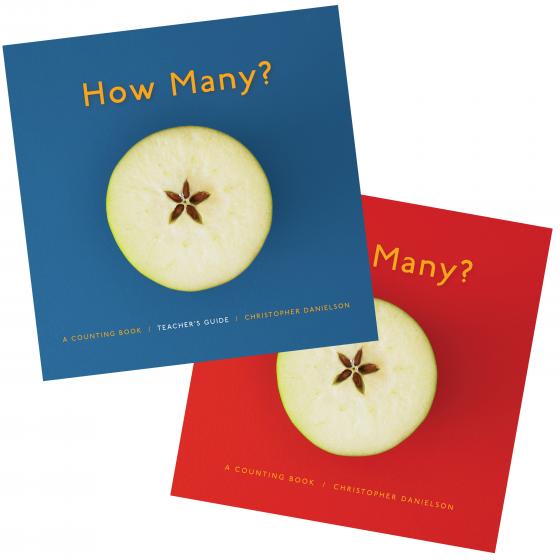
Christopher Danielson also wrote a teacher’s edition. How Many? Teacher Edition helps teachers turn simple counting activities into rich math discussions. The guide offers easy‑to‑use teaching tips, real classroom examples, and questions that spark curiosity—making counting a fun, thoughtful way to build mathematical thinking.
Chris Danielson has his own website, Talking Math with Your Kids , which has articles and conversations centering on “How many?”
The website Number Talk , has a wonderful collection of images that can be used to begin mathematical conversations.
Whether it’s socks in the laundry, grapes on a plate, or toys on the floor—math is everywhere.
And when we talk about it together, we help children build a joyful, lasting relationship with numbers.