Where STEM Begins and Bias Ends
“Ughhhh,” I hear Mateo growl with frustration. I’ve heard his tower coming crashing down for the third time, and he has reached his boiling point. “Why does this keep happening?” he grumbles.
“I think I know the problem,” Olivia says, stepping closer. “I was watching you. It keeps falling down on this side.” She points to the bottom layer. “Those little blocks are too wobbly. I think you need the bigger ones”
Without waiting for permission, she begins searching for the wider, heavier block and carefully reconstructs the foundation with help from a silent, but thankful Mateo.
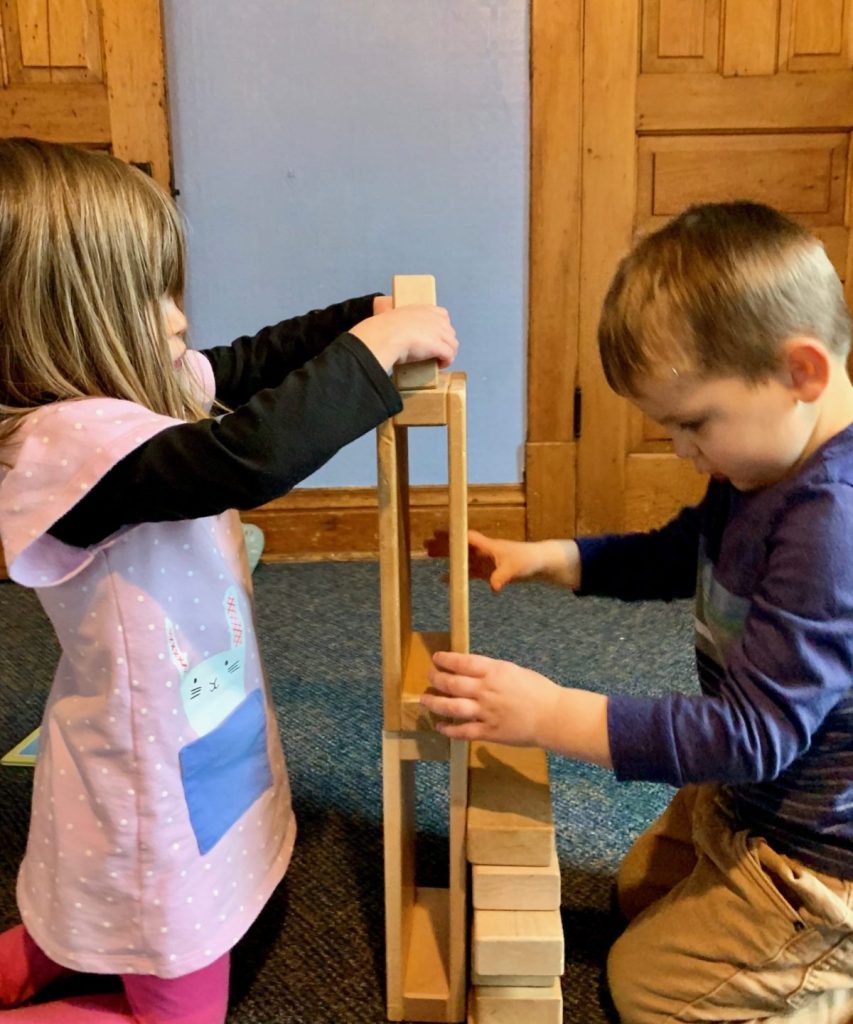
“We need a strong base. I think we can make it taller now.” she says as the two young friends silently begin another attempt at a tall tower.
This small moment is packed with critical STEM learning. Olivia isn’t just playing; she’s using spatial reasoning, testing gravity and balance, and engaging in the engineering design process—identifying a problem, brainstorming solutions, building a prototype, and testing. When their new, sturdy tower finally stands tall, the five-year-olds beam. They haven’t learned about engineering; they’ve become engineers, experiencing the joy of design and successful problem-solving firsthand.
Less than 24 hrs earlier I had read yet another gender biased STEM statistic. I can’t help wondering: what happens to Olivia’s confidence and curiosity as she grows older? How do I keep every child believing that they are good builders and great engineers?
A new 40-year synthesis of global research, conducted by AIR experts David Miller and Courtney Tanenbaum and funded by the National Science Foundation, found that by age six, children already see girls as less capable than boys in computing and engineering. As they grow, this bias only strengthens—especially for fields like technology. Meanwhile, girls are seen as “naturally better” at reading and writing, a belief that begins around age eight and deepens over time.
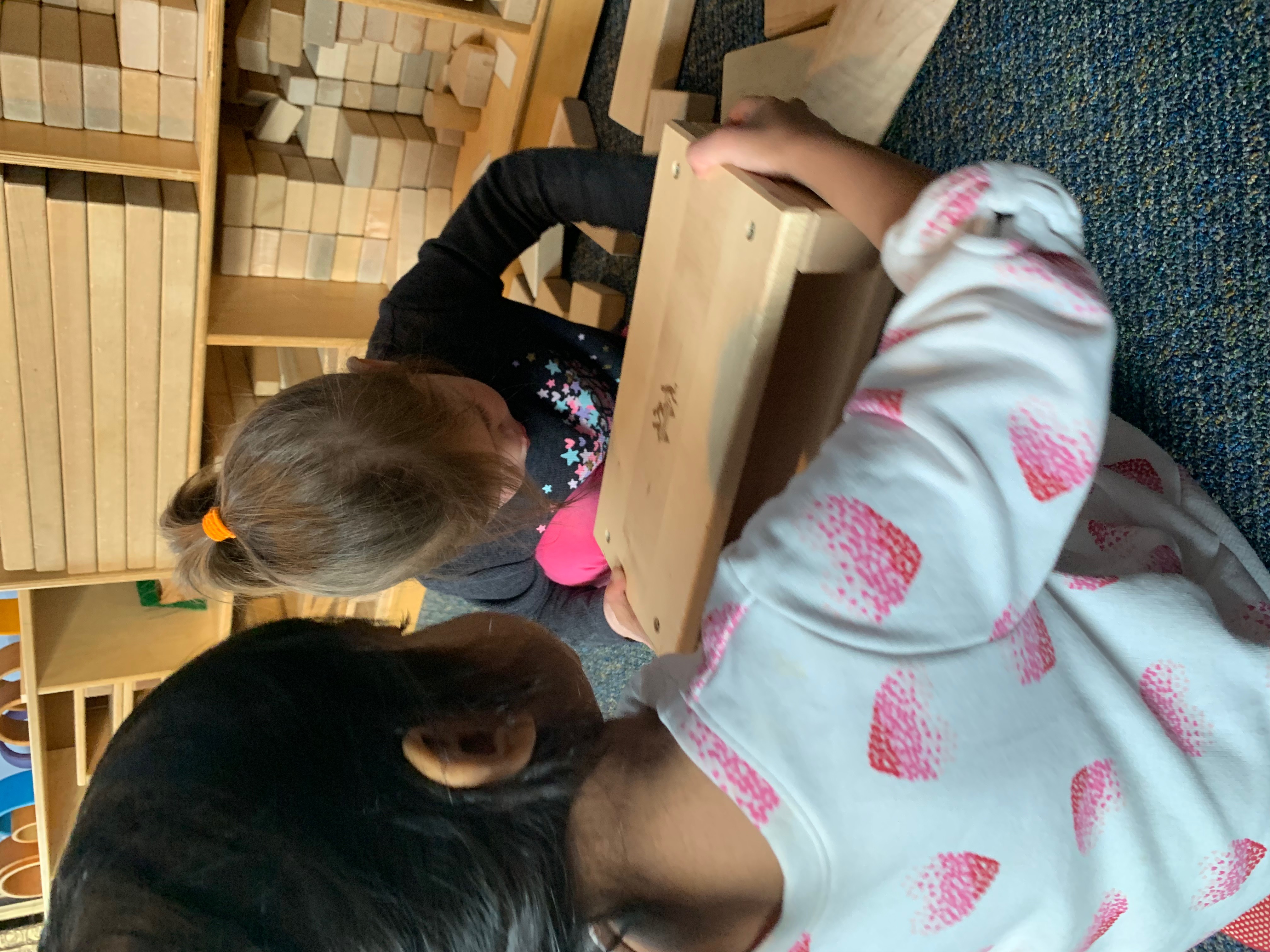
So much of this begins right here—in our classrooms, at the block shelf, in moments that seem small but matter deeply. When we notice a child like Olivia, or any child for that matter, taking the lead, we can name the skills out loud: You’re doing engineering. You’re solving problems. You design a tower that had a stronger and stable base. We can make space for persistence and failure without rushing in to fix or praise only the “finished” product. We can find the language to name the STEM moments when they happen.
Maybe it’s time to rethink where this kind of learning happens. What if we brought the unit blocks back—not just to the block corner, but to math class?
Blocks are often seen as a “preschool material,” something children outgrow once they can write numbers on a worksheet. But those same wooden rectangles, triangles, and cylinders hold the foundation of mathematical thinking: geometry, measurement, equivalency, balance, and spatial reasoning. When children stack, compare, and rebuild, they’re testing ideas about size, shape, and balance—long before they can name them.
That’s not just math—it’s also science and engineering. That’s STEM. Every time a child adjusts a leaning tower or experiments with how weight and height affect stability, they’re exploring physics and the engineering design process in real time.
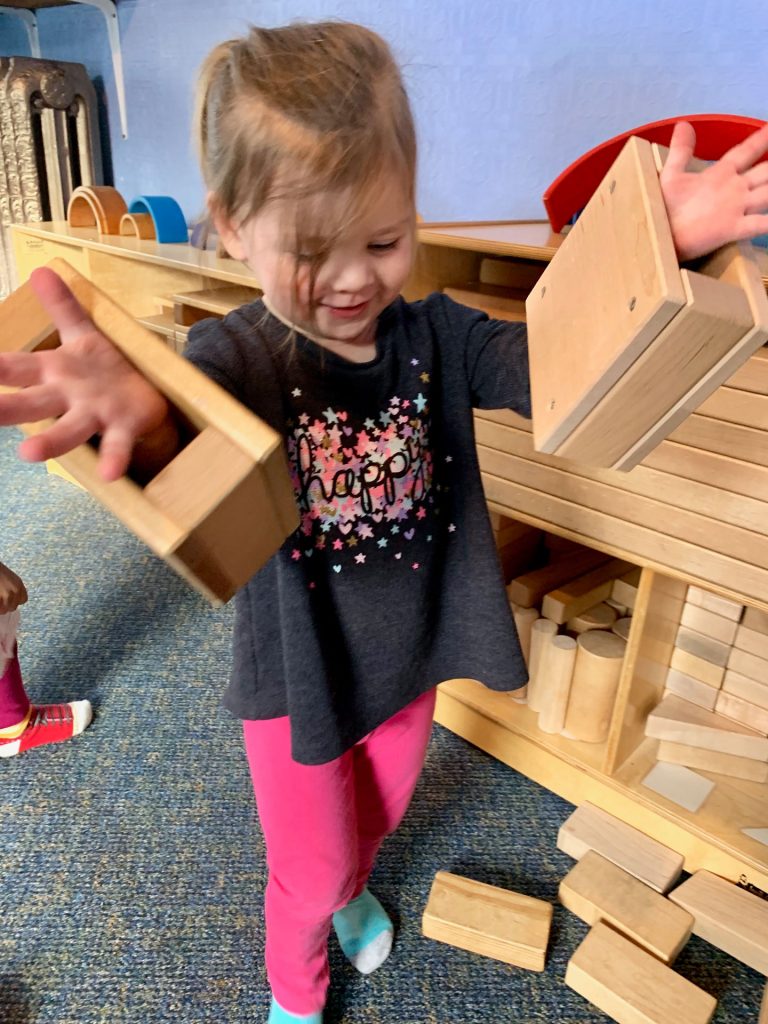
What if math class looked more like recess, full of movement, mistakes, collaboration, and curiosity? What if instead of papers full of numbers, children built and rebuilt actual structures, noticing patterns, testing symmetry, and proving their thinking with their hands? The block corner isn’t a break from learning—it’s a laboratory for it.
When we move math back to the blocks, we move learning back to the body. And when the body moves, the brain lights up. Research shows that physical movement helps young children learn better. Movement activates more parts of the brain and makes learning stick. So when a child stacks blocks or rolls a ball down a ramp, they’re learning about size, shape, balance, and cause-and-effect in ways that are real and lasting. Hands-on play turns abstract ideas into something kids can see, touch, and understand. That’s how deep learning happens—and why it matters so much in early STEM. When we make space for that kind of active learning, we keep the doors open for every child—especially the ones who might otherwise be told to “sit down” instead of “keep building.”
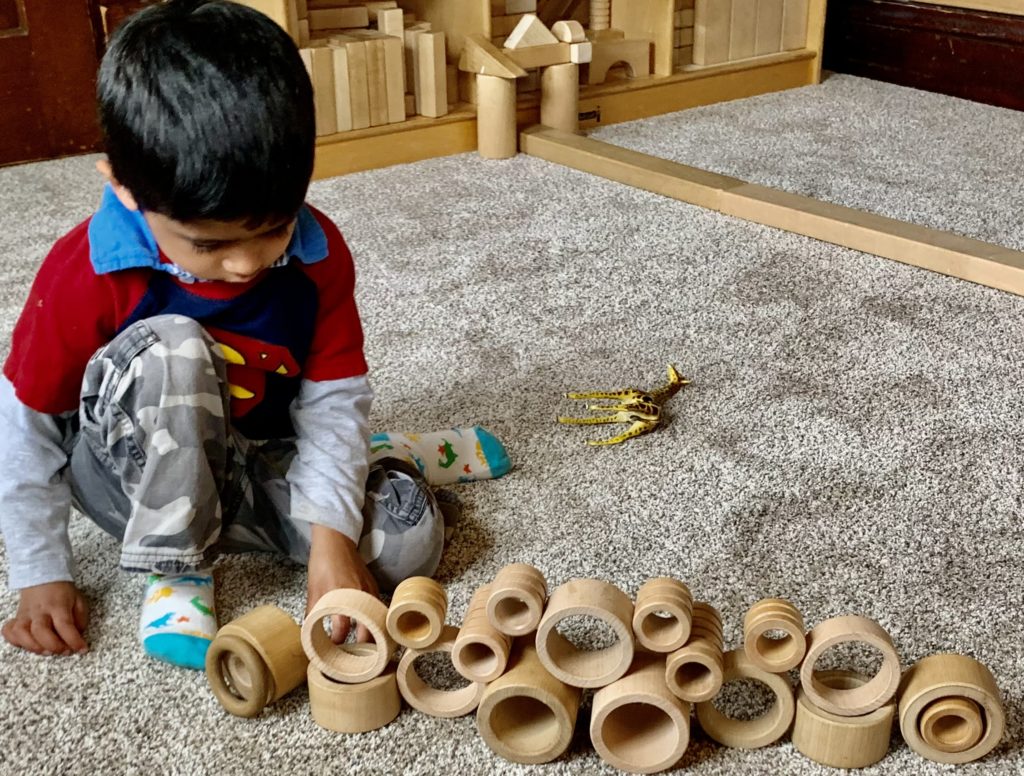
If we want to keep children in STEM, we start by giving them what every engineer needs: time to tinker and test out their ideas. We fill our classrooms and our recess time with unit blocks, tape measurers, magnets, mirrors and flashlights that invite collaboration and investigations. These tools foster curiosity, experimentation, and problem-solving—core elements of STEM.
We don’t need to wait until elementary school to “introduce” STEM. It’s already happening—in block corners, sandboxes, and cardboard forts. The question is whether we recognize it, nurture it, and make it visible to children themselves. We can’t control every message the world sends, but we can make sure our classrooms send a louder one: Keep building!
Blocks are a classic toy that are timeless. Kids use imaginations, use their “engineering” skills, and there just plain fun. But you can use them for anything including math.